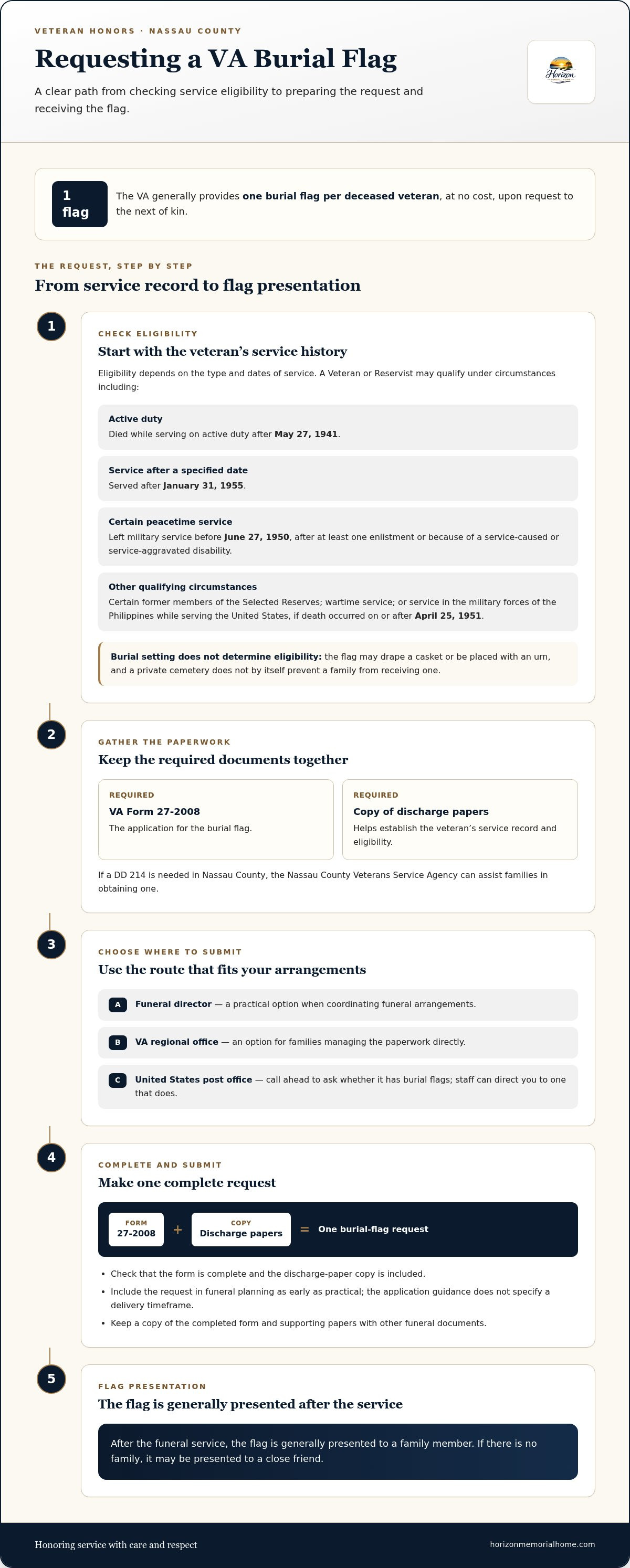
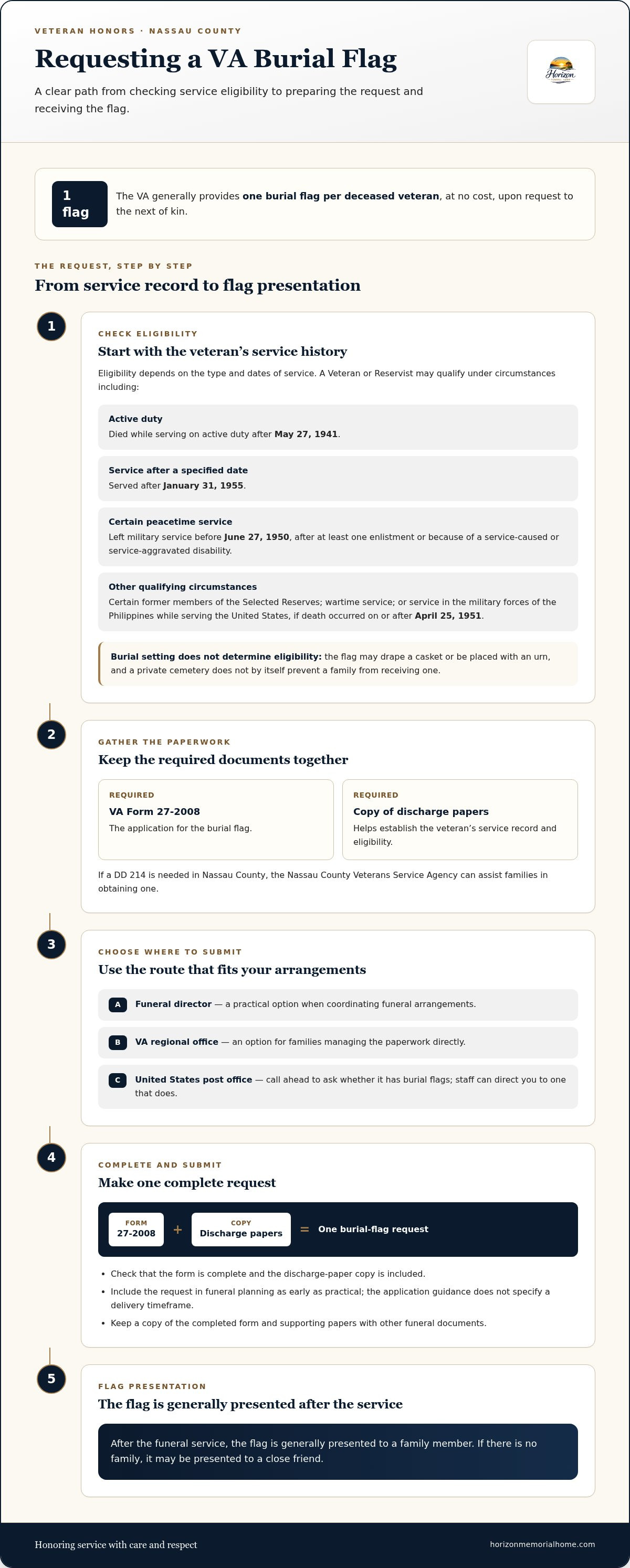
The veteran’s service record determines whether a family may receive a burial flag in Nassau County. According to the U.S. Department of Veterans Affairs, a Veteran or Reservist may qualify if they died while serving on active duty after May 27, 1941, or served after January 31, 1955. Other qualifying service circumstances also apply.
It’s understandable to want clear answers while making funeral arrangements and honoring someone you love. The VA provides one burial flag per deceased veteran, generally to the next of kin upon request. A family can apply using VA Form 27-2008 and a copy of the veteran’s discharge papers.
This guide explains who may qualify for a burial flag, what to prepare when requesting one, and how to care for and display it respectfully. You’ll also find practical guidance on including Veteran Honors in funeral arrangements in Nassau County.
Key Takeaways
- Eligibility can include several kinds of Veteran or Reservist service, not only active-duty service. Learn which service circumstances may apply to your family.
- Understand where to submit a burial-flag request and how military discharge records can help establish eligibility.
- Protect the flag by displaying and handling it respectfully, and learn what options are available when it becomes worn.
- See how Veteran Honors can be included in funeral arrangements, alongside traditional services or cremation.
Table of Contents
- 1. Am I eligible for a burial flag?
- 2. Applying with VA Form 27-2008
- 3. Caring for and displaying a burial flag
- 4. Requesting a burial flag for a veteran
- Horizon Funeral Home: Traditional Funeral Services
1. Am I eligible for a burial flag?
For a burial flag for a veteran’s family in Nassau County, eligibility depends on the Veteran’s or Reservist’s service history. According to the U.S. Department of Veterans Affairs, a Veteran or Reservist may qualify if they died while serving on active duty after May 27, 1941. A Veteran or Reservist may also qualify if they served after January 31, 1955, according to the U.S. Department of Veterans Affairs.
Peacetime service can qualify in a specific circumstance. According to the U.S. Department of Veterans Affairs, a Veteran or Reservist may qualify after peacetime service if they left military service before June 27, 1950, after at least one enlistment or because of a service-caused or service-aggravated disability. Certain former members of the Selected Reserves may also qualify. Veterans who served during wartime may qualify, too.
Some people who served in the military forces of the Philippines while serving the United States may qualify if they died on or after April 25, 1951. Eligibility can depend on the type and dates of service, so discharge papers can help establish the veteran’s record. The Nassau County Veterans Service Agency can assist families in obtaining a DD 214. A burial flag for a veteran’s family in Nassau County may be requested when the service record meets an eligible category.
A private cemetery does not by itself prevent an eligible veteran’s family from receiving a burial flag. The flag may drape a casket or be placed with an urn, so the type of burial setting does not determine eligibility.
The U.S. Department of Veterans Affairs provides a burial flag at no cost for an eligible veteran’s funeral. Families do not pay the VA for the flag itself.
Families in Nassau County may submit a request through a funeral director, a VA regional office, or a United States post office. Call a post office ahead of time to ask whether it has burial flags. If not, staff can direct you to one that does.
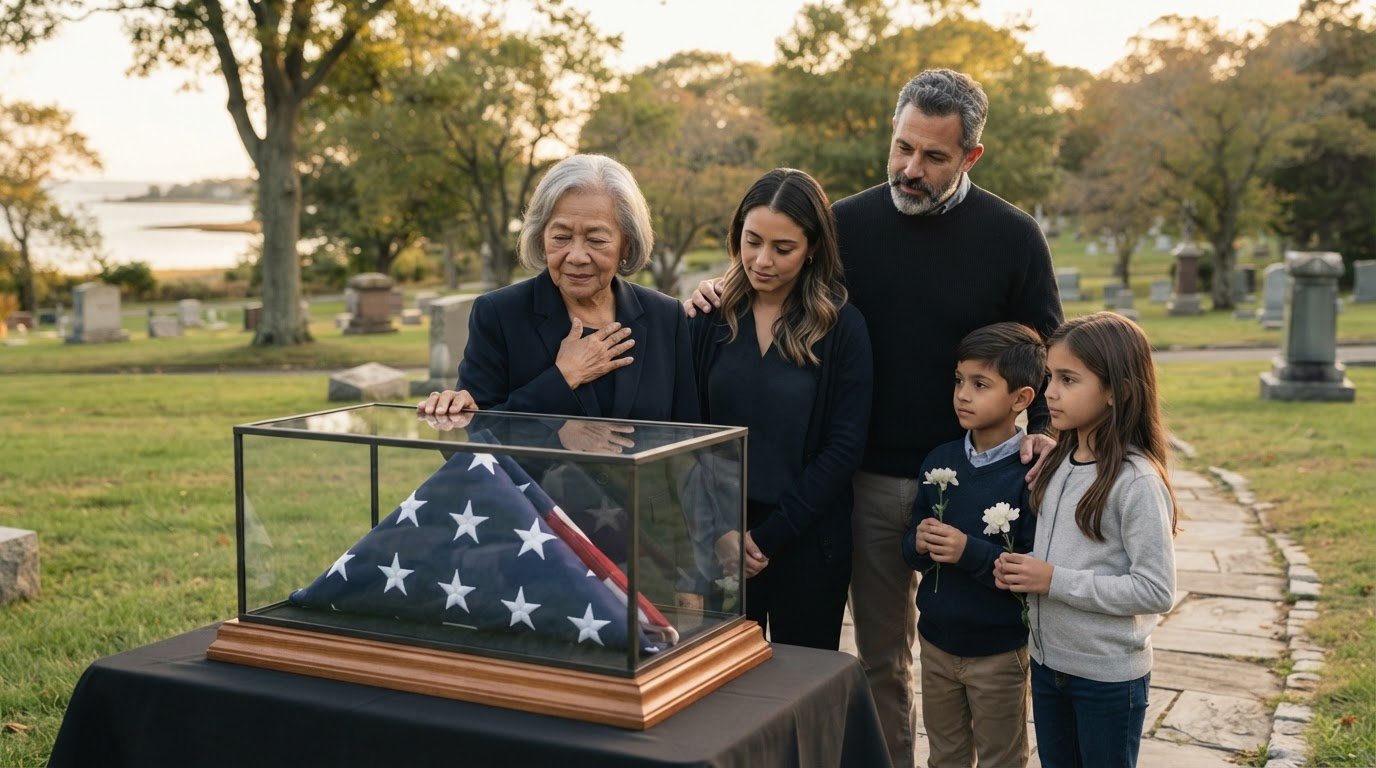
The VA generally provides one flag per deceased veteran, upon request, to the next of kin. After the funeral service, the flag is generally presented to a family member. If there is no family, it may be presented to a close friend.
2. Applying with VA Form 27-2008
To request a burial flag, submit VA Form 27-2008 with a copy of the veteran’s discharge papers. These are the required documents identified for the application. Keep the form and discharge-paper copy together so they can be submitted as one request.
Families can submit the application through a funeral director, a VA regional office, or a United States post office. Choose the option that fits your arrangements. For instance, a family coordinating a funeral may submit the form through its funeral director, while a family managing the paperwork directly may use a VA regional office or post office.
Before submitting, make sure the form is complete and the discharge-paper copy is included. The service record helps establish the veteran’s eligibility, while the application communicates the family’s request. If you’re applying in Nassau County and need a DD 214 to verify service, the Nassau County Veterans Service Agency can assist families in obtaining one.
The application steps described here do not specify a delivery timeframe. Processing and delivery affect when the flag arrives, so include the request in funeral planning as early as practical. If you submit it through a post office, call ahead to ask whether it has burial flags. If not, staff can direct you to a post office that does.
Keep a copy of the completed VA Form 27-2008 and the supporting discharge papers with your other funeral documents. This can help your family keep track of what was submitted and respond more easily if paperwork needs attention. If you’re coordinating funeral arrangements at the same time, store the application materials with those planning details.
The request is for one burial flag per deceased veteran, generally provided to the next of kin. Submitting the form and a copy of the discharge papers gives the family a clear starting point for requesting the flag and arranging its presentation during the service.
3. Caring for and displaying a burial flag
A burial flag carries a family’s remembrance of military service, so handle it with care. Keep it indoors rather than leaving it outside for long periods, where weather can damage it. After a ceremony, store it in a clean, protected place to help preserve it for family gatherings and moments of reflection.
Display the flag respectfully and leave its design unchanged. Don’t add or attach words, symbols, or drawings, even as a personal tribute. Don’t use the flag to hold or carry anything, such as keepsakes or other objects. These practices preserve its dignity and purpose.
If your family displays the flag at home, keep its surroundings calm and uncluttered. Avoid extended outdoor exposure, and return it to a protected indoor place after a brief display. Handle it carefully when moving it between a memorial gathering and storage. Don’t treat it as a decorative surface or a place to set family mementos.
A flag in good condition may be donated to a national cemetery with an Avenue of Flags. These cemeteries display donated flags on patriotic holidays, allowing the flag to honor service in a shared setting. Consider whether your family would prefer to keep it at home or contribute it for public display.
A worn flag still deserves a respectful next step. A Veterans Service Organization can accept a flag in any condition and retire one that is ripped, faded, frayed, or otherwise damaged. If the fabric shows these signs, stop displaying it outdoors. Donating it for retirement helps ensure it is removed from use with care.
Whether your family keeps or donates the flag, decide together how you want to remember it. A protected display, an unchanged design, or donation to an Avenue of Flags each offers a thoughtful way to honor the veteran.
4. Requesting a burial flag for a veteran
A burial flag request is separate from arranging the funeral, so assign one family member to keep the paperwork together. Submit VA Form 27-2008 with a copy of the veteran’s discharge papers. The application can go through a funeral director, a VA regional office, or a United States post office. A local post office may not have flags on hand, so call before visiting.
Upon request, the VA generally provides one flag per deceased veteran to the next of kin. After the funeral, it is generally presented to a family member or, if there is no family, a close friend. The flag may drape a casket or be placed with an urn. Eligible U.S. veterans may also receive military funeral honors, including flag folding and presentation and the playing of taps, when the family requests them. Eligibility for honors must be confirmed by the appropriate military branch or government agency.
Does Nassau County offer veteran burial or funeral assistance in addition to a burial flag? The Nassau County Veterans Service Agency can assist families in obtaining a DD 214 to verify military service. For a non-service-related veteran death, the U.S. Department of Veterans Affairs may provide a burial expense allowance of up to $700 and a plot allowance of up to $700. According to the U.S. Department of Veterans Affairs, an application for a burial allowance must be submitted within two years from the date of permanent burial.
Keep the flag request separate from any burial allowance paperwork. They serve different purposes: the flag honors military service, while an allowance application concerns eligible burial expenses. If the flag is lost, destroyed, or stolen, the VA cannot replace it, though some Veterans organizations may help obtain a replacement.
As you coordinate the ceremony, consider how the flag presentation fits the family’s plans. You can coordinate funeral arrangements that include a respectful moment for the flag and military honors.
Horizon Funeral Home: Traditional Funeral Services
Horizon Funeral Home helps families bring funeral arrangements and a veteran’s tribute together with care. Traditional Funeral Services can include planning the ceremony around the family’s wishes, including a time for flag presentation. Veteran Services can help recognize military service as part of those personalized arrangements.
Families considering cremation can plan a service that honors the veteran and gives relatives space to gather. If a loved one needs transportation across borders, Horizon Funeral Home coordinates Worldwide Transportation, subject to verification of documents, carrier availability, and receiving-provider requirements. The right arrangements depend on the family’s wishes and the circumstances.
If you’re ready to discuss arrangements or Veteran Honors, contact Horizon Funeral Home for guidance at your own pace.
Make the Next Step a Family Decision
A helpful next step is a family conversation about how you want the veteran’s tribute to feel. Decide who will keep the flag after the service, how relatives would like to participate, and which personal or military traditions matter most. Shared decisions can help relatives feel included and shape a ceremony that reflects the person you’re honoring.
For a burial flag for a veteran’s family in Nassau County, the request is one part of a larger moment of remembrance. You don’t have to plan every detail alone. Horizon Funeral Home can help you consider how a tribute fits your family’s plans, whether they include a gathering or another form of remembrance. Horizon serves families in Nassau County, Brooklyn, Queens, Staten Island, Manhattan, and the Bronx, with care in English, Russian, Armenian, Georgian, and Spanish. Call anytime to discuss your next step.
Contact Horizon Funeral Home to talk through the arrangements. Each thoughtful choice can help create a tribute grounded in respect and care.
Frequently Asked Questions
Am I eligible for a burial flag?
You may qualify based on the Veteran’s or Reservist’s service history. According to the U.S. Department of Veterans Affairs, qualifying circumstances include active-duty death after May 27, 1941, service after January 31, 1955, and certain peacetime service before June 27, 1950. Some former Selected Reserve members and certain Philippine military service members may also qualify. Discharge records can help clarify which service history applies.
Can I get a replacement flag?
The VA cannot replace a burial flag that has been lost, destroyed, or stolen. Some Veterans organizations may be able to help obtain a replacement. If the flag is worn, a Veterans Service Organization can accept it in any condition and retire one that is ripped, faded, frayed, or otherwise damaged. Stop displaying damaged fabric and ask the organization about its flag-retirement process.
How Can You Apply?
Complete VA Form 27-2008 and submit it with a copy of the Veteran’s discharge papers. You can give the application to a funeral director, a VA regional office, or a United States post office. If you plan to use a post office, call first about flag availability. Keeping your paperwork together can help, especially if a family member is also coordinating service arrangements.
How do I care for the flag?
Protect the flag from prolonged outdoor exposure, which can cause weather damage. During a gathering, display it respectfully without attaching words, symbols, or drawings. Don’t use it to hold or carry objects. Afterward, return it to a protected place rather than leaving it outdoors. These habits help preserve the flag and its role as a tribute to the veteran’s service.
How do I maintain the flag?
Before displaying the flag, check for fading, fraying, tears, or other damage. If it is in good condition, your family may choose to donate it to a national cemetery with an Avenue of Flags for patriotic holiday displays. If it is damaged, a Veterans Service Organization can retire it from use. Don’t add repairs or markings that change its appearance.
How can a veteran’s family apply for a burial flag?
For a burial flag for a veteran’s family in Nassau County, submit VA Form 27-2008 with a copy of the Veteran’s discharge papers. The VA generally provides one flag per deceased Veteran, upon request, to the next of kin. Nassau County families can choose a funeral director, VA regional office, or post office for submission. Keep the request separate from other paperwork, such as any burial allowance application.
Where can Nassau County families get help with the application?
Families seeking a burial flag for a veteran’s family in Nassau County can ask the Nassau County Veterans Service Agency for help obtaining a DD 214 to verify military service. Keep that record with the application materials, especially if the family is still locating discharge documents. A local post office can also be contacted ahead of a visit to ask whether it has burial flags available.