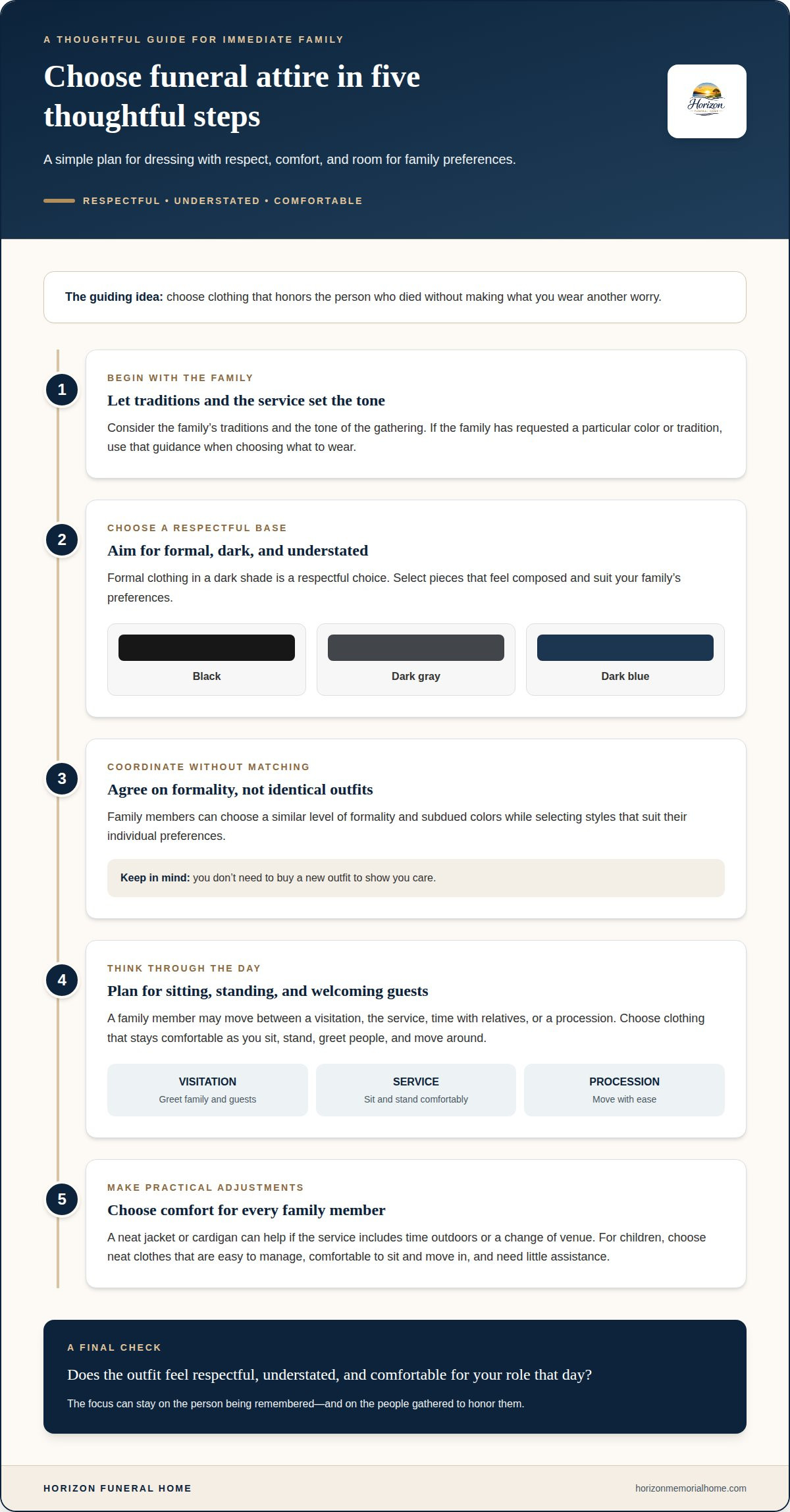
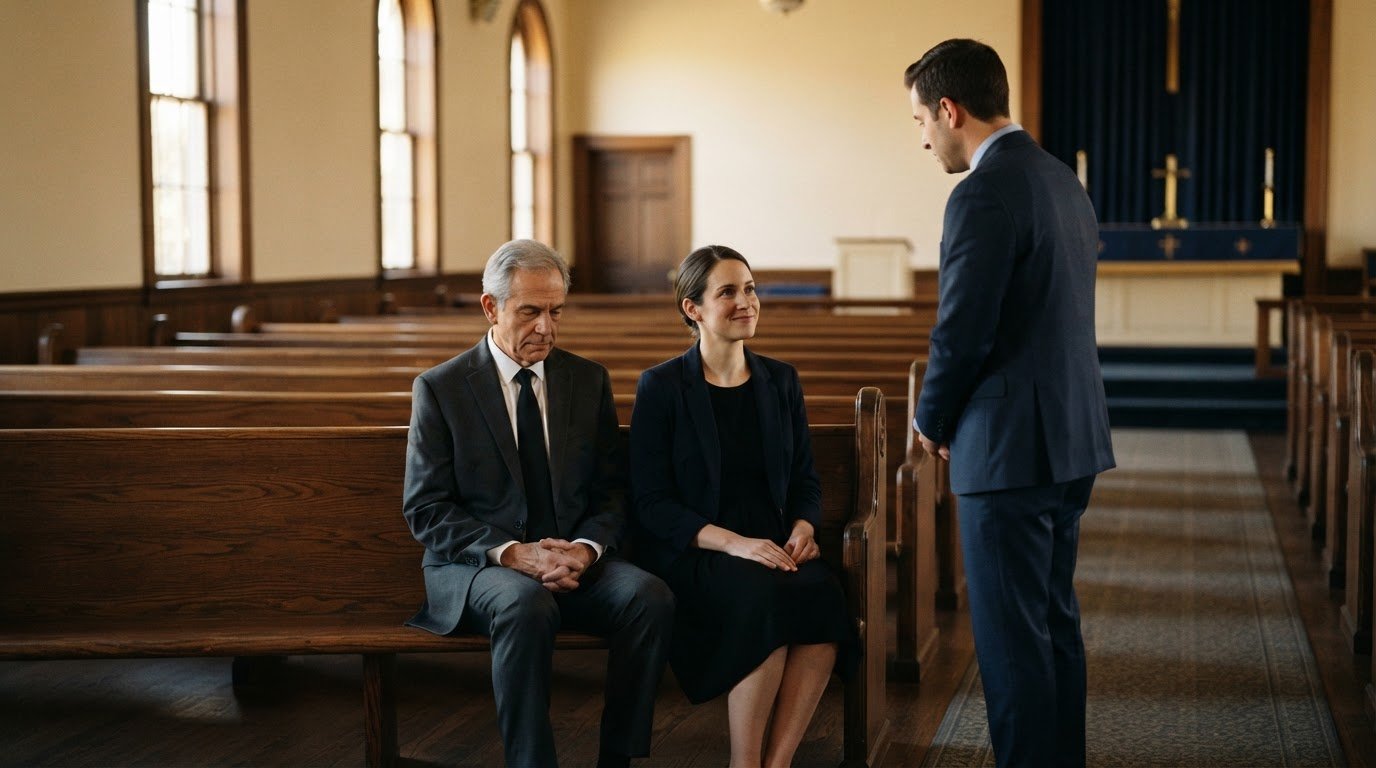
Choose clothing that shows quiet respect without drawing attention. Funeral etiquette for immediate family generally calls for formal attire in a dark color, such as black, dark gray, or dark blue. Close relatives usually sit in the front rows, and a simple greeting is enough when mourners offer condolences.
It’s understandable to want to get the details right while you’re grieving. You don’t need perfect words or have to make every choice alone. This guide covers where immediate family typically sits, how to greet mourners and receive condolences, and what to wear, while recognizing that families have different traditions and preferences. A little preparation can make practical moments easier and leave more room to remember the person you love.
Key Takeaways
- Arrange family seating around closeness to the person who died, while making room for blended-family relationships and personal preferences.
- At a receiving line, a brief thank-you is enough; introduce relatives when it helps mourners feel welcome.
- For a visitation, choose polished attire and leave casual options such as jeans, shorts, flip-flops, and athletic shoes at home.
- Let family traditions and the tone of the service guide clothing choices, keeping the overall look respectful and understated.
Table of Contents
- 1. Where should immediate family sit at a funeral?
- 2. Greeting mourners and accepting condolences
- 3. Appropriate funeral clothing for immediate family
- 4. Funeral attire for immediate family
- Horizon Funeral Home: Traditional Funeral Services
1. Where should immediate family sit at a funeral?
At a funeral service, immediate family generally sits in the front rows, close to the casket. The first 1-3 rows are often reserved for family, with the closest relatives seated ahead of other family members. Spouses, parents, and children usually sit nearest the front; close friends or honorary family may sit beside them if the family wishes.
There’s no single seating order for every family. One practical arrangement places the deceased’s spouse or partner, parents, and children closest to the casket, followed by siblings, grandparents, and other relatives. In a blended family, the deceased’s relative may sit nearest the casket, with their spouse beside them. Children can sit by age or wherever they feel comfortable.
At some services, family members sit on the right and friends or colleagues on the left. Treat this as a custom, not a universal rule: the venue, faith tradition, and family’s wishes may shape the layout. If you’re arranging seats, reserve the front rows, consider who should sit together, and leave room for pallbearers or relatives who need support. Young children can sit beside a parent or trusted family member.
Are funeral etiquette customs different by religion, culture, or region in the United States? Yes. Families may follow different religious, cultural, and regional practices, so seating should reflect their traditions and preferences rather than a single national rule.
What is proper etiquette for immediate family at a funeral reception or repast? Greet guests, thank them for coming, and follow the host’s cues about seating and food. If you need a quiet moment, step away briefly with support from a relative.
What should immediate family say in a funeral program or obituary? Include the person’s name, a brief remembrance, and the service details the family wants to share. A short line about a beloved role or treasured quality can make the tribute personal.
2. Greeting mourners and accepting condolences
A receiving line gives close friends and other mourners a clear way to offer condolences. A traditional order places the surviving spouse or life partner first, followed by the deceased’s children, parents, siblings, and grandparents. Families can adjust the lineup to suit their relationships. If the deceased was a parent and the children are young, grandparents or the deceased’s siblings may stand at the front or receive guests instead.
At a visitation, greet the family before finding a seat. If you’re receiving condolences, a simple “Thank you for coming” is enough; you don’t need a perfect reply. If a mourner doesn’t know the relative beside you, introduce them briefly: “This is my sister, Maya.” That small gesture can make the exchange more personal.
- Keep your response simple. Acknowledge the person’s words with thanks, even if they struggle to express what they mean.
- Make room for introductions. Briefly name a spouse, child, or grandparent when the mourner hasn’t met them.
- Follow the family’s arrangement. If a receiving line is set for a wake or visitation, use the same family lineup as the funeral line.
A wake gives friends and family a chance to share memories and lets people who can’t attend the funeral pay their respects. The funeral home is often a suitable place to offer condolences and support; visiting the family at home is also appropriate. Keep conversation gentle, and avoid personal grievances or phrases such as “they’re in a better place.”
Whether the arrangements include cremation, burial, or a later memorial, the family can decide how guests are received. A funeral director can coordinate the receiving line and procession, so relatives know where to stand and when to move. That leaves you free to greet mourners at your own pace.
3. Appropriate funeral clothing for immediate family
Funeral etiquette for immediate family includes choosing attire that honors the person who died without making clothing another worry. Formal clothing in dark shades is a respectful choice; black, dark gray, and dark blue are suitable options. Choose pieces that feel comfortable and suit the family’s traditions. You don’t need a new outfit to show you care.
Consider the full day before deciding what to wear. You may move between a visitation, the service, and time with relatives afterward. Choose clothing that stays comfortable while sitting, standing, and greeting guests. A neat jacket or cardigan can be useful if the service includes time outdoors or a change of venue.
Family members can coordinate by choosing a similar level of formality rather than identical outfits. Relatives might agree on subdued colors while choosing styles that suit their preferences. If the family has asked guests to wear a particular color or follow a specific tradition, use that request as your guide.
For children, choose neat clothes that are easy to manage throughout the gathering. An outfit they can wear comfortably with little assistance can make transitions easier. If a child will greet relatives or take part in the service, consider what will let them move and sit comfortably.
A thoughtful part of funeral etiquette for immediate family is choosing an outfit that suits your role that day. If you’ll welcome guests or take part in a procession, wear clothing that lets you move comfortably and keeps the focus on the person being remembered. Understated choices can help the family feel prepared while honoring individual preferences.
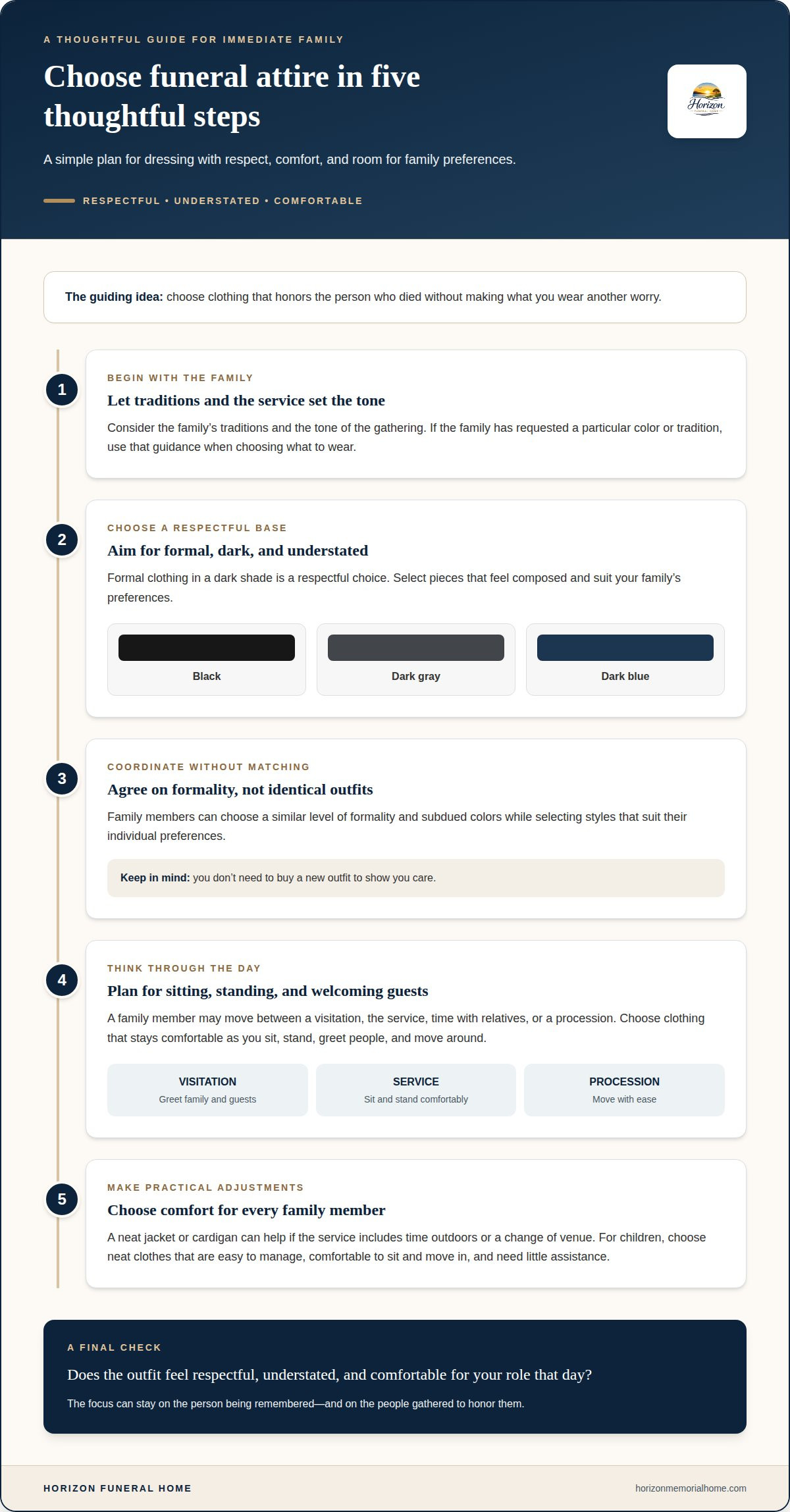
4. Funeral attire for immediate family
For immediate family, formal clothing in a dark color is a respectful choice. Black, dark gray, and dark blue are suitable options for a funeral. Choose an outfit that feels composed and comfortable rather than treating the day as a reason to buy something new. Clean, well-fitting clothing can help you focus on the service and the people gathered to remember the deceased.
Think about how the day will unfold. A family member may attend a visitation, sit through the service, greet friends, and join a procession. Clothing that stays comfortable while standing and sitting can make those transitions easier. A jacket, cardigan, or simple layer can also be useful when moving between the funeral home and another venue.
Keep accessories understated. A modest watch, simple jewelry, or a plain tie can complement formal clothing without drawing attention. If you’ll carry flowers or help arrange them, choose a bag and shoes that leave your hands free. Avoid bold slogans or distracting patterns that may feel out of place at a quiet memorial.
Consider the family’s preferences before choosing an outfit. The family may request a particular color or a less traditional style to reflect the person who died. If there’s no specific request, dark, formal attire offers a clear starting point. Relatives don’t need matching outfits; a shared level of formality can create a thoughtful, cohesive appearance.
For children, choose neat clothes that let them sit comfortably and stay close to a trusted adult. For example, a child might wear dark trousers and a sweater, or a simple dress with comfortable shoes. Keep a spare layer nearby for a long service. Practical choices can make a difficult day feel less complicated.
If you’re planning a service and want support coordinating its details, explore traditional funeral services.
Horizon Funeral Home: Traditional Funeral Services
Horizon Funeral Home supports families in Brooklyn, Queens, Staten Island, Manhattan, the Bronx, and Nassau County with funeral services. Families can discuss cremation, veteran services, or worldwide transportation as part of their arrangements.
These services can help when relatives are coordinating arrangements while grieving. For example, a family planning a traditional service can discuss the details with Horizon Funeral Home, while a family honoring a veteran can ask about veteran honors. Worldwide transportation can help coordinate the logistics of moving a loved one across borders.
Every family’s wishes and traditions are personal. Contact Horizon Funeral Home to talk through arrangements that matter to your family.
Let Your Next Step Reflect What Matters
There’s no single way to guide a family through a funeral. The choices that feel right reflect your loved one’s wishes, your family’s traditions, and the care you can offer one another. Let funeral etiquette for immediate family serve as a guide, not another burden. A simple plan for the gathering can leave more space for remembrance and connection.
If coordinating arrangements feels difficult, you don’t have to manage every detail alone. Horizon Funeral Home can help you discuss a personalized service that fits your family’s needs and wishes. Call anytime, day or night, when you’re ready to take the next step.
Contact Horizon Funeral Home for support. May the days ahead bring room for shared memories, gentle support, and peace.
Frequently Asked Questions
What should family members wear at a funeral?
Choose formal, understated clothing that suits the service and feels comfortable throughout the day. If you’re unsure about a family request, review the invitation or funeral notice before choosing an outfit. Preparing everything together, including shoes and outerwear, can prevent a last-minute decision. Personal or cultural traditions may also guide your choice, especially if the family has requested a particular style.
When Should I Visit?
Visit during the announced visitation or wake hours so your arrival fits the family’s plans. If you’re visiting at home instead, arrange your arrival with the family first and keep the visit considerate of their needs. A brief visit may be easier than staying through a busy day. If you can’t attend in person, a sympathy card is still a thoughtful way to reach out.
Where should immediate family sit at a funeral?
Immediate family generally sits in the front rows, close to the casket, with the closest relatives nearest the front. If you’re unsure which seats are reserved, ask an usher or funeral director before sitting. This helps avoid confusion and keeps family members together. At some services, family sits on the right and other mourners on the left.
Who Stands in the Receiving Line at a Visitation?
The surviving spouse or life partner traditionally stands first in a receiving line, followed by the deceased’s children, parents, siblings, and grandparents. Families can adapt the order to their circumstances. If the children are young, for example, grandparents or the deceased’s siblings may receive guests at the front or stand in the line instead. A brief greeting and thank-you are enough for each visitor.
Are immediate family members expected to attend the wake, viewing, or visitation?
Immediate family members are generally expected to attend if they can. Being present gives close relatives an opportunity to receive support and remember the deceased with others. A strained relationship can make attendance difficult, but a relative should generally attend unless specifically asked not to. If you’re unsure how to participate, keep your visit brief and focus on acknowledging the family.
Can family members bring a sympathy gift instead of flowers?
Yes, a sympathy gift is an appropriate alternative to flowers. Consider a gesture that supports the family, such as bringing food, which may be helpful during a demanding time. If the family requests donations to a named charity in lieu of flowers, respect that preference. A simple card with your gift can express care without requiring elaborate words.