
The most helpful end-of-life conversations happen before a crisis leaves everyone making decisions under pressure. A gentle way to discuss end-of-life plans with parents is to start with their values, then talk through medical wishes, important papers, and preferences for burial or cremation. You don’t need to decide everything in one sitting.
It’s understandable if the subject feels uncomfortable or you’re unsure how to begin. Choosing a calm moment, opening simply, and giving your parent room to speak can make the conversation feel more like an act of care than a paperwork task.
This guide offers practical ways to start and revisit the discussion, explains which documents to locate, and suggests how to talk about treatment wishes and final arrangements. Begin by listening, taking notes, and letting the next step follow what matters most to your family.
Key Takeaways
- Begin with a calm, personal conversation about what matters to your parent, and let it unfold over more than one sitting if needed.
- Make it easier to find essential papers by asking where wills, powers of attorney, and advance directives are kept.
- Discuss medical preferences and who your parent trusts to speak for them, then revisit those wishes as circumstances change.
- Talk through burial or cremation preferences ahead of time so your family has clearer guidance when decisions arise.
Table of Contents
- 1. Starting conversations about end-of-life planning
- 2. Locating wills, powers of attorney, and advance directives
- 3. Medical treatment and living-will wishes
- 4. Burial and cremation decisions
- Horizon Funeral Home: Traditional Funeral Services
1. Starting conversations about end-of-life planning
Starting early gives aging parents room to explain what matters before a crisis. In a 2018 survey, 92 percent of Americans said discussing end-of-life care wishes was important, while 32 percent had discussed those wishes. The gap shows why a first conversation can be a meaningful step, even if it feels awkward.
If you’re considering how to discuss end-of-life plans with parents, choose a calm time, such as a quiet meal, rather than waiting for a medical emergency. Prepare a simple opening: “I’ve been thinking about how our family can honor everyone’s wishes.” You could also invite your parent to share advice about finances or family responsibilities. Preparing your own advance directive first can make the conversation feel mutual rather than one-sided.
Ask what quality of life means to them, whom they’d trust to speak for them, and what care they’d want if they couldn’t speak for themselves. You might also ask which traditions or gatherings matter to them. Focus first on listening, then, with their permission, write down the important points.
If your parents don’t want to discuss plans, acknowledge their discomfort instead of pushing for an answer. Suggest returning to one small topic later, such as whom to call in an emergency, or share your own wishes first.
AARP reported that 85 percent of adults over age 45 feel comfortable discussing end-of-life issues, yet seven in 10 of those adults say the topic is generally avoided. A gradual approach can help: discuss one preference, pause, and let your parent decide when to continue. The Conversation Project and the National Hospice and Palliative Care Organization offer conversation guides and tools to help families find words and organize thoughts.
The best way to discuss end-of-life plans with parents is to respect their pace and priorities. Before you begin, consider what you need to learn now and what can wait. A friend’s experience may offer a natural opening, but keep your parent’s preferences at the center. A short conversation today can make the next one easier.
2. Locating wills, powers of attorney, and advance directives
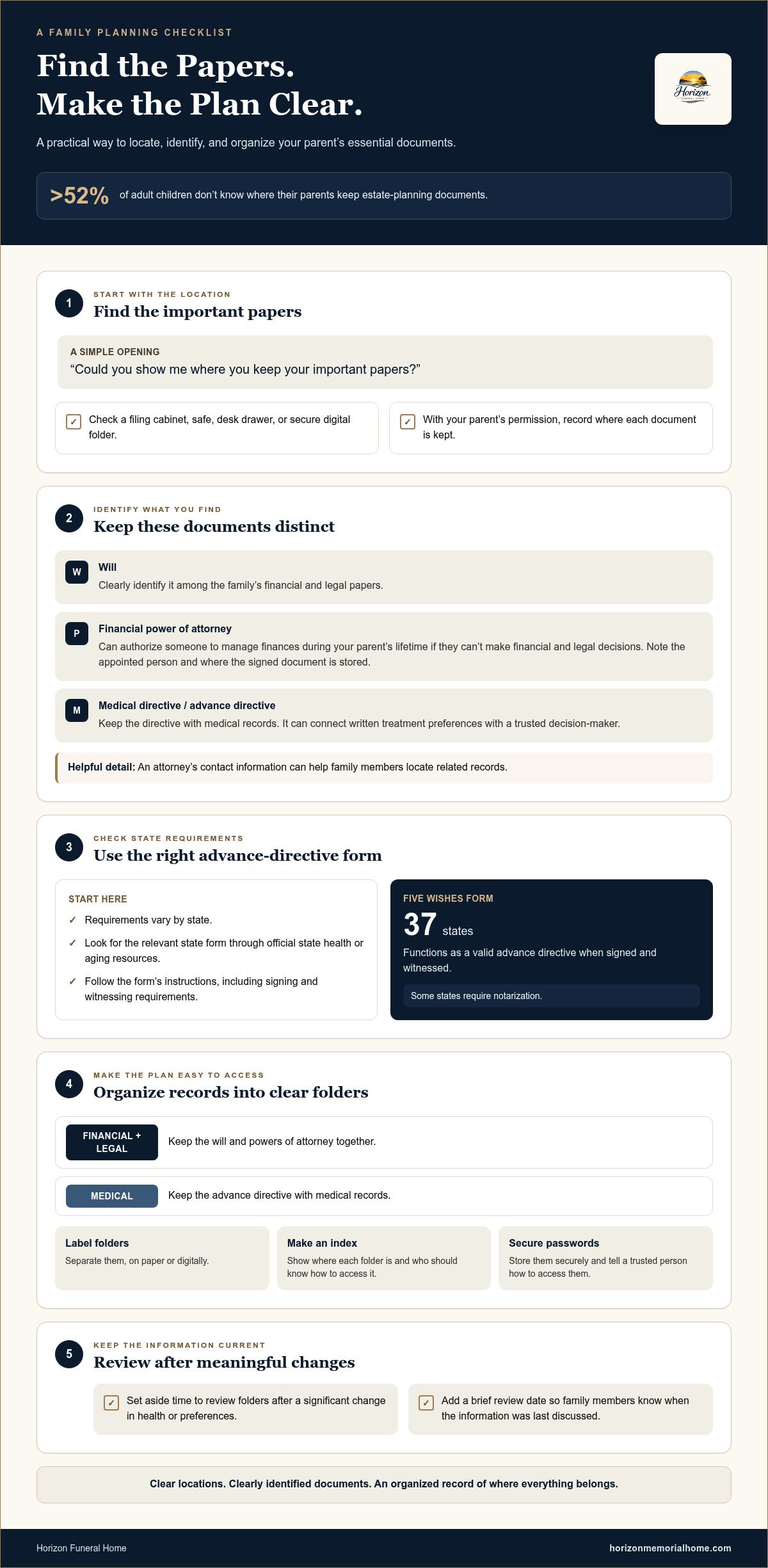
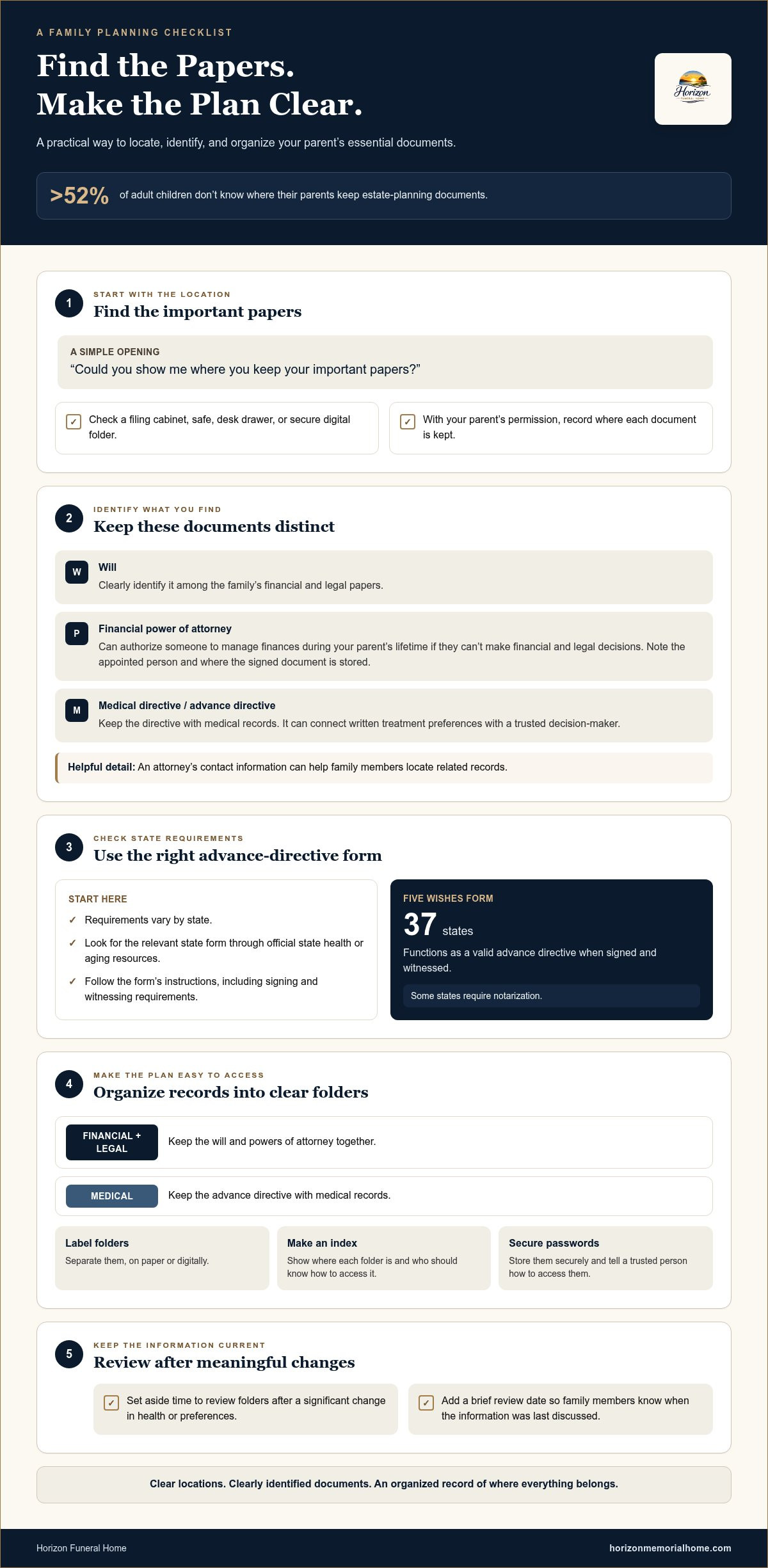
Start with a simple request: “Could you show me where you keep your important papers?” More than 52% of adult children don’t know where their parents keep estate-planning documents. Ask about a filing cabinet, safe, desk drawer, or secure digital folder, then record each document’s location with your parent’s permission.
Keep the will, financial power of attorney, and medical directive clearly identified. A power of attorney can authorize someone to manage finances during a parent’s lifetime if they can’t make financial and legal decisions. Note the appointed person’s name and where the signed document is stored. An attorney’s contact details can also help family members locate related records.
Requirements for advance directives vary by state. Look for the relevant state form through official state health or aging resources, and follow its instructions. The Five Wishes form functions as a valid advance directive in 37 states when signed and witnessed; some states require notarization.
To create an advance directive, start with the form for your parent’s state and discuss the choices together. A health care proxy should understand your parent’s values and wishes and be willing to follow them. Completing your own directive first can make the process more reciprocal: share whom you’d choose and why, then invite your parent to consider their own choice.
Organize financial, legal, and medical records in separate, labeled folders, whether on paper or digitally. Keep the will and powers of attorney with financial and legal papers, and the advance directive with medical records. Make a simple index that shows where each folder is stored and who should know how to access it. Store passwords securely and tell a trusted person how to access them.
Set aside time to review the folders together after a significant change in health or preferences. A brief note with the review date can help family members know when the information was last discussed.
3. Medical treatment and living-will wishes
A living will records medical treatment wishes for a time when someone can’t make decisions or communicate them. Ask your parent what matters most in care, such as comfort, independence, or time with loved ones. A health care directive can include a living will and a health care power of attorney, connecting written preferences with a trusted decision-maker.
Discuss hospice, palliative care, and life-sustaining treatment in plain language. Ask what your parent understands about each option and what questions they want to raise with their care team. Then explore their preferences for resuscitation, pain management, and treatments that might prolong life. Focus on the outcomes that matter to them instead of asking for one answer to every possible situation.
Specific examples can make the conversation easier. You might ask, “If treatment couldn’t restore your ability to recognize family, what would you want us to understand?” Or, “What would help you feel comfortable if an illness became harder to treat?” With permission, write down your parent’s own words so their wishes aren’t reduced to another family member’s interpretation.
Choosing a health care agent deserves its own conversation. The person should understand your parent’s values and care wishes, and be willing to follow them even if relatives disagree. Ask whom your parent trusts to speak for them, then discuss how that person will learn about changing preferences and share decisions with family members.
Connect medical choices with practical planning. Keep the living will with medical records and make sure the named agent knows where to find it. Financial and legal documents serve different purposes, but organizing them alongside the directive can help loved ones understand the overall plan. Revisit written wishes periodically, especially after a significant diagnosis or a change in preferences, and update the relevant documents as needed.
4. Burial and cremation decisions
Families often face burial or funeral decisions without guidance from the person who died; the page states this happens to 80% of families. Among parents over age 65 who have discussed end-of-life preferences with adult children, 20% have made burial or funeral plans. Families typically decide between burial and cremation within days of a death. A clear conversation beforehand can give loved ones a starting point during a difficult time.
Begin with an open question: “Have you thought about burial or cremation?” Invite your parent to explain what feels meaningful. They may prefer a traditional gathering, a quieter farewell, or a particular cultural or family custom. Ask what they hope relatives will remember and whether personal wishes should shape the arrangements. Listen without treating the first answer as a final decision.
Clarify practical preferences, too. Ask whom your parent wants involved, what kind of gathering would feel right, and whether they’ve already made arrangements. If they prefer burial, ask what they want the service to reflect. If they prefer cremation, ask how they’d like family to honor their memory. Record their words and any existing plan documents, then tell the family members who may need to act on their behalf.
Keep the conversation focused on choices your parent can make now, rather than trying to settle every detail. A useful next step is to write down the preference, the date discussed, and where related documents are kept. Revisit the notes if your parent’s wishes change. If the family is ready to consider arrangements, explore cremation and direct burial options as part of planning around those expressed preferences.
Horizon Funeral Home: Traditional Funeral Services
For families in Brooklyn, Queens, Staten Island, Manhattan, the Bronx, and Nassau County, Horizon Funeral Home can help put a parent’s documented preferences into practice. The team provides Funeral Services and Cremation Services, with personalized arrangements shaped around each family’s wishes and traditions. Sharing notes about meaningful customs, participants, and the kind of gathering your parent wanted can help keep arrangements connected to those wishes.
For families arranging transportation across borders, Horizon Funeral Home coordinates Worldwide Transportation, subject to verification of documents, carrier availability, and receiving-provider requirements. Families can also discuss Veteran Services for a parent who served. These options can help when relatives are ready to plan and want support coordinating arrangements that reflect the choices already discussed.
Contact Horizon Funeral Home to talk about arrangements that honor your parent’s wishes.
Let the next conversation begin with one clear step
You don’t need a perfect script or a complete plan before you speak. Choose one topic your parent feels ready to discuss, then agree on a small next step, such as noting a preference or setting a time to continue. Moving at a shared pace keeps the conversation respectful and makes room for your parent’s voice.
Learning how to discuss end-of-life plans with parents is also about knowing when practical support could help turn their wishes into arrangements. If your family is ready to talk through that part, contact Horizon Funeral Home. You can take this one step at a time, with care for the person and the memories that matter.
Frequently Asked Questions
How do I start a conversation with my parents about end-of-life plans?
Ask permission to talk, then suggest one manageable subject instead of presenting a full checklist. For example: “Could we talk about what you’d want us to know if you became seriously ill?” Offer a choice of time or setting, such as a walk or a phone call. If the conversation feels strained, pause and agree on when to return to it.
What advance care planning documents do adults need in the United States?
Common planning documents include a health care directive, a health care power of attorney, a financial power of attorney, and a will. Each has a different purpose: medical papers address care preferences and decision-making, while financial authority and a will address other matters. Forms and signing instructions vary by state, so use the relevant state form and follow its directions.
What should a living will include, and how is it different from a healthcare power of attorney?
A living will records medical treatment preferences for a time when someone can’t make or communicate decisions. A health care power of attorney names someone to speak or make decisions on that person’s behalf. The documents complement each other: one provides written guidance, while the other identifies a trusted decision-maker. Review them together so the agent understands the preferences behind the written instructions.
How do I discuss funeral, burial, or cremation preferences with parents?
Invite your parent to describe what would feel meaningful instead of starting with detailed arrangements. Ask whether they picture a gathering, a quiet farewell, or a tradition they want included. Then clarify their preference for burial or cremation and whom they want to know about it. Write down their wishes in their own words and share the note with the family members involved.