A burial flag is available to honor an eligible veteran, according to the U.S. Department of Veterans Affairs. Eligibility includes veterans who died on active duty after May 27, 1941, veterans who served after January 31, 1955, and peacetime veterans discharged or released before June 27, 1950; certain former members of the Selected Reserve may also qualify. For veteran funeral services in the Bronx, understanding this keepsake is one part of planning a respectful farewell.
Military honors matter, but they don’t have to make a service feel impersonal or overly formal. You can shape the gathering around your loved one’s story while honoring military traditions. This guide explains what cemetery honors may include, how families can personalize a service, and how the American flag is folded, presented, and cared for after the ceremony. It also outlines practical steps to help you make informed choices and give each tribute its proper place.
Key Takeaways
- Learn what cemetery military honors may include and how families can choose a tribute that feels right.
- Personalize the service with meaningful music, photographs, spoken memories, or a moment of reflection.
- Understand how the burial flag is folded and presented, and how to care for it after the ceremony.
- Explore burial benefits and the steps involved in applying for a VA burial flag.
Table of Contents
- 1. Military honors at a local cemetery
- 2. Personalized veteran funeral services
- 3. Displaying and folding the flag
- 4. What funeral and burial benefits are available to U.S. veterans and their families?
- Horizon Funeral Home: Traditional Funeral Services
1. Military honors at a local cemetery
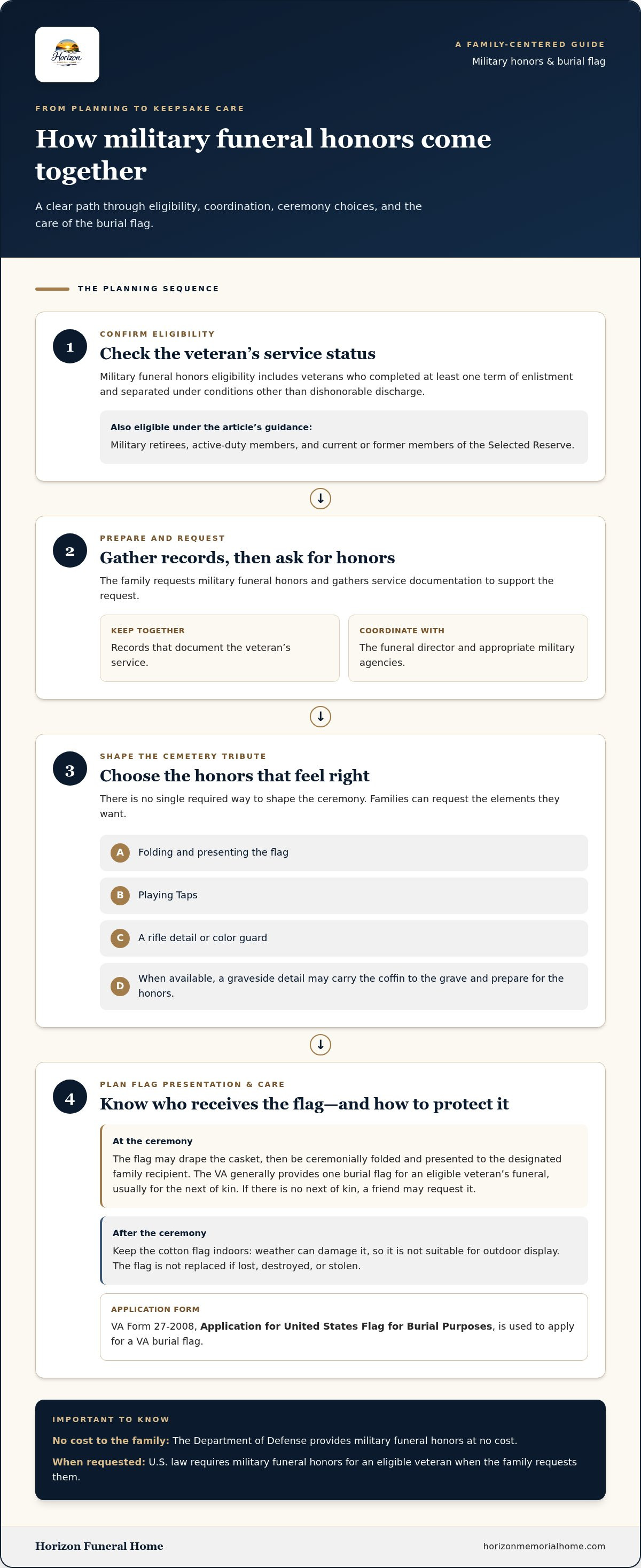
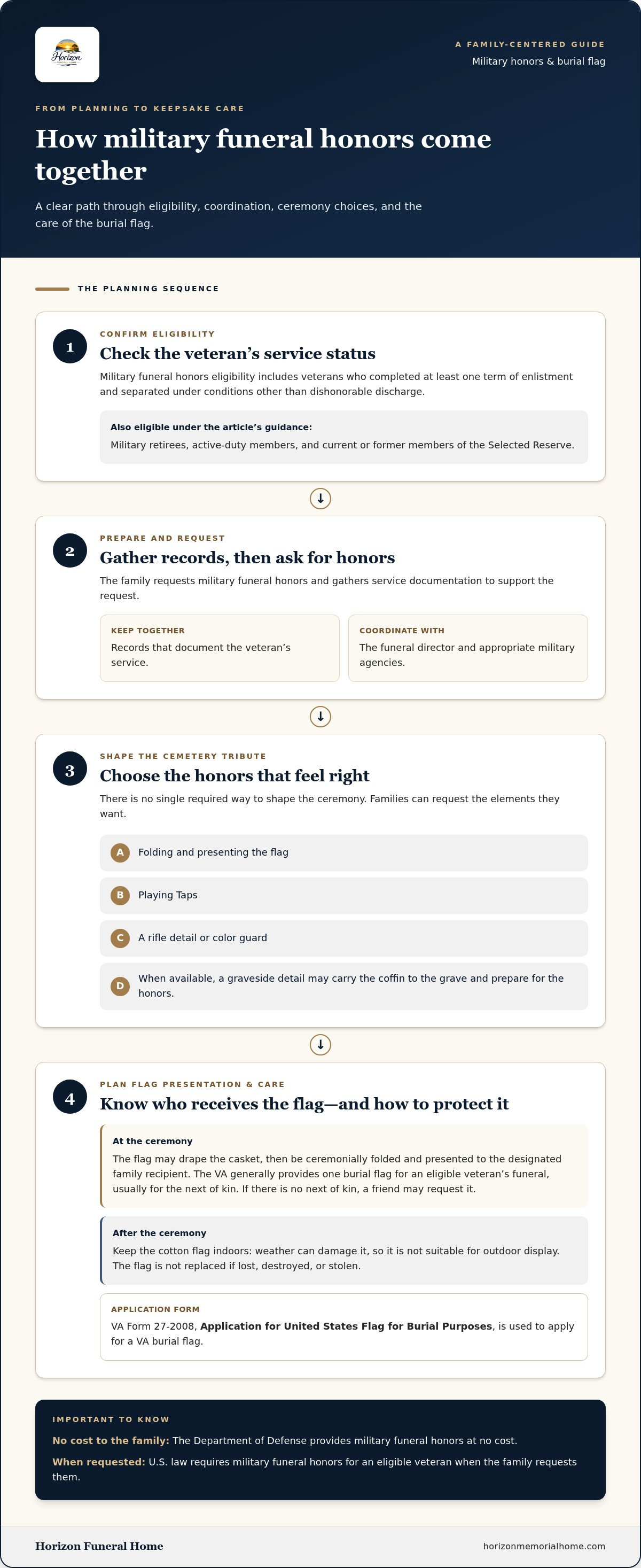
Military honors at a cemetery may include folding and presenting the flag, playing Taps, and a rifle detail or color guard. When available, a graveside detail may carry the coffin to the grave and prepare for the honors. The family can request the elements they want; there’s no single required way to shape the ceremony.
To request military funeral honors in the Bronx, the family asks for honors and coordinates arrangements with the funeral director and appropriate military agencies. Gather service documentation to support the request. U.S. law requires military funeral honors for an eligible veteran when the family requests them.
Eligibility for military funeral honors includes veterans who completed at least one term of enlistment and separated under conditions other than dishonorable discharge. Military retirees, active-duty members, and current or former Selected Reserve members are also eligible.
To apply for VA burial benefits, submit the appropriate claim with records supporting the veteran’s service and burial circumstances. VA Form 40-10007 is for a pre-need burial eligibility determination, not a request for burial after someone has died. The benefit sought affects which application process applies.
Burial allowances may help families with eligible burial expenses. The amount depends on the applicable benefit and the circumstances of the veteran’s service and burial, so there is no single figure for every family. Keep funeral and burial records together to support a claim.
An eligible Bronx veteran may be buried in a VA national cemetery, subject to VA eligibility requirements. The NYC Department of Veterans’ Services arranges national-cemetery burials for eligible indigent and unclaimed veterans. Start by determining eligibility and identifying the preferred burial location.
2. Personalized veteran funeral services
Military honors recognize a veteran’s service, while the rest of the funeral can reflect the family’s wishes. In New York City, families can personalize the service format, viewing, music, and tributes. Both a formal ceremony and a more relaxed gathering can include military recognition.
Personal touches can connect the service to a veteran’s life beyond their uniform. Consider displaying service photographs, sharing a letter written during service, or inviting relatives to speak. A memory table, video tribute, printed keepsake, or quiet moment of reflection can give guests different ways to remember.
For a chapel service, families may request that the flag be moved away from the coffin’s head or arrange an open-casket viewing. Lighting, seating, and photographs can help set the tone, while a guest book or space for written messages lets guests contribute at their own pace.
To arrange a veteran’s funeral and apply for benefits, gather service documentation and records related to the funeral and burial. The required documents depend on the benefit being claimed. Keeping records together can help the family and funeral director coordinate the process.
For transportation and burial paperwork in the Bronx, plan the destination and coordinate arrangements with the cemetery and relevant agencies. Transportation logistics and cemetery paperwork are related but separate steps. If the burial involves another location, worldwide transportation coordination may help organize the journey, subject to verification of documents, carrier availability, and receiving-provider requirements.
Military funeral honors are provided at no cost to the family by the Department of Defense. VA benefits may include burial allowances, access to national cemeteries, and official markers; eligibility and benefit type determine what applies. These benefits do not cover every funeral expense.
Rather than relying on a label, Bronx families can look for arrangements that coordinate military honors with personal details and practical needs. For a tribute shaped around the veteran’s story, explore personalized veteran honors.
3. Displaying and folding the flag
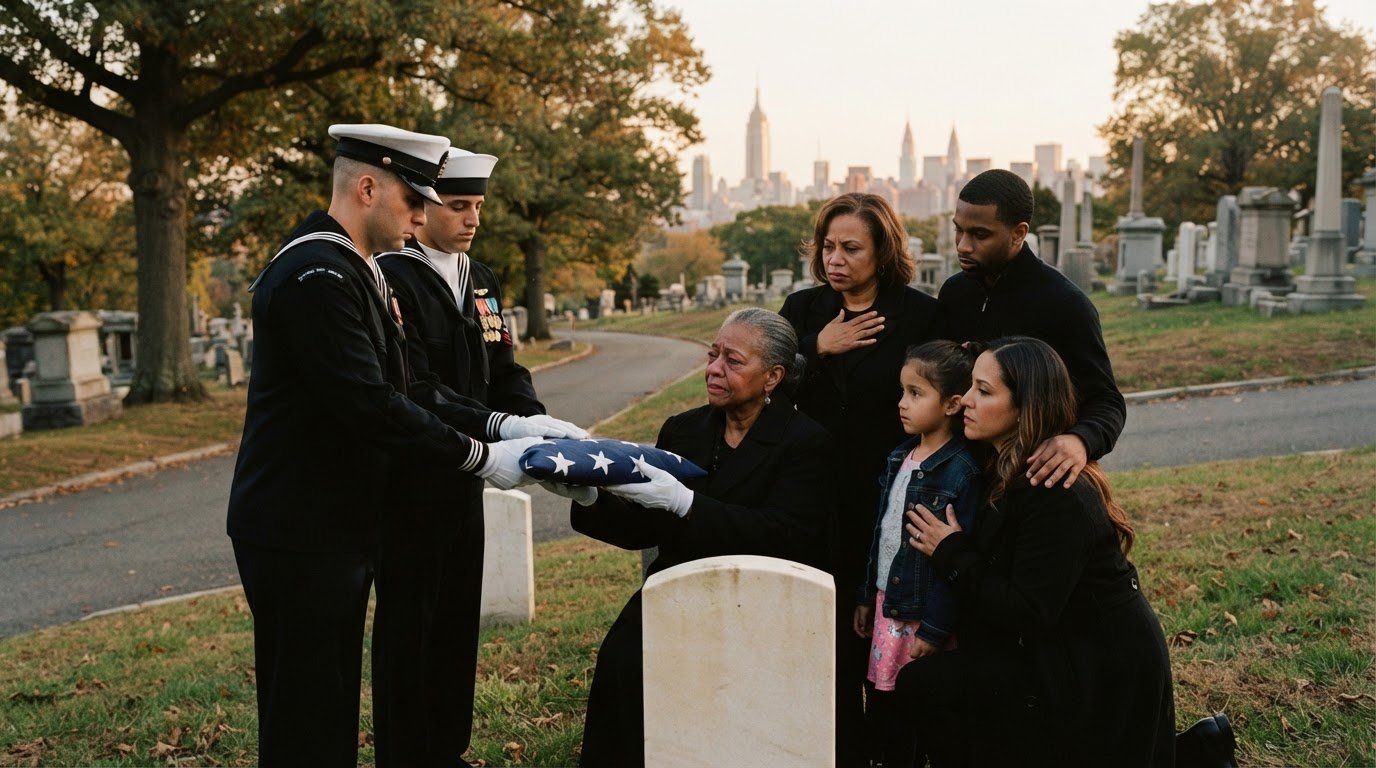
For families planning veteran funeral services in the Bronx, a flag ceremony can be a meaningful part of the farewell. The American flag may drape the casket, then be folded and presented to the next of kin. Honors may also include Taps or recognition of the veteran’s branch and rank. Families can request the elements that reflect their wishes.
During the presentation, a ceremonial detail folds the flag and offers it to the designated family recipient. The VA generally provides one burial flag for an eligible veteran’s funeral, usually for the next of kin to keep. If there is no next of kin, a friend may request the flag. These details can help the family decide who should receive it.
Families arranging veteran funeral services in the Bronx can also plan how the flag appears before and after the ceremony. Avoid placing a spray of flowers on a flag-draped casket; flowers arranged nearby can honor the veteran without covering the flag. At a chapel service, the family may request moving the flag away from the coffin’s head for viewing.
After the ceremony, keep the VA burial flag indoors. It’s made of cotton and can be damaged by weather, so it isn’t suitable for outdoor display. If the family wants an outdoor tribute, choose another display approach to preserve the keepsake flag.
A person may apply for a VA burial flag using VA Form 27-2008, Application for United States Flag for Burial Purposes, according to the U.S. Department of Veterans Affairs. The flag is not replaced if lost, destroyed, or stolen. Knowing who will receive it, where it will be displayed, and how it will be protected can help families make thoughtful plans before the ceremony.
4. What funeral and burial benefits are available to U.S. veterans and their families?
Eligible families may receive different kinds of burial support, depending on service history and burial circumstances. These may include burial allowances, access to a VA national cemetery, an official grave marker, and a burial flag. Benefits are distinct, and receiving one does not mean every funeral expense is covered.
Eligibility for a VA national cemetery may extend to veterans, service members, and some family members. A veteran’s service record and discharge circumstances help determine eligibility. Veterans can also apply during their lifetime for a pre-need burial eligibility determination, helping families understand this option before arrangements become urgent.
Burial allowances may help with qualifying burial expenses. The amount depends on the applicable allowance and circumstances, including the veteran’s service and burial. Keep service and funeral records together to support benefit applications and help identify which assistance may apply.
A burial flag is another form of recognition. The U.S. Department of Veterans Affairs provides one flag for an eligible veteran’s funeral and doesn’t replace one that is lost, destroyed, or stolen. Eligibility includes veterans who died on active duty after May 27, 1941, and veterans who served after January 31, 1955. Certain former Selected Reserve members may also qualify.
A person may apply for a VA burial flag using VA Form 27-2008, Application for United States Flag for Burial Purposes, according to the U.S. Department of Veterans Affairs. The VA generally gives the flag to the veteran’s next of kin as a keepsake after the service. If there’s no next of kin, a friend may request it.
In New York City, the NYC Department of Veterans’ Services arranges dignified national-cemetery burials for eligible indigent and unclaimed veterans. For help coordinating funeral arrangements and veteran honors, begin planning a veteran’s funeral.
Families can request a burial flag using VA Form 27-2008, and keeping the veteran’s service and funeral records together can support benefit applications. The flag application deadline and the application process for other burial benefits are not established here.
VA support may include a burial allowance for qualifying expenses, access to a VA national cemetery, a grave marker, and a burial flag. These benefits do not necessarily cover every funeral expense. The allowance amount and covered expenses depend on the applicable benefit and circumstances.
A burial allowance is a contribution toward qualifying burial expenses. The amount depends on the applicable allowance and circumstances such as the veteran’s service and burial. Keep service and funeral records together to support an application.
Horizon Funeral Home: Traditional Funeral Services
Horizon Funeral Home can help families coordinate veteran honors and shape funeral arrangements around their loved one’s service and personal story. Its Traditional Funeral Services can bring together cemetery honors, meaningful music, photographs, and shared memories in a gathering that feels personal.
Families may also choose cremation, memorials, or celebrations of life that reflect their wishes. If arrangements involve travel across borders, Horizon’s Worldwide Transportation service coordinates the journey, subject to verification of documents, carrier availability, and receiving-provider requirements. These services can help bring practical arrangements and a meaningful tribute together.
For a conversation about arrangements, contact Horizon Funeral Home at a time that feels right for your family.
Shape a Farewell That Feels True to Their Story
Planning veteran funeral services in the Bronx can begin with a conversation among those closest to the veteran. Share what matters most, whether it’s a particular memory, a family tradition, or how your loved one hoped to be remembered. You don’t need every detail settled before taking the first step.
Before discussing arrangements, it may help to write down a few personal priorities. Note who would like to speak, which memories the family wants to preserve, and what kind of gathering would feel comfortable. These choices can help shape a tribute grounded in the person’s life, not just the day’s logistics.
Horizon Funeral Home can listen to your wishes and help guide the arrangements with care. When your family is ready to talk through the next step, contact Horizon Funeral Home. A thoughtful farewell can take shape one decision at a time, in a way that honors the person your family loves.
Frequently Asked Questions
Who Is Eligible to Receive the Burial Flag?
Eligibility includes veterans who served during wartime, certain former Selected Reserve members, and people who served in specific Philippine military forces while serving with U.S. Armed Forces and died on or after April 25, 1951. The U.S. Department of Veterans Affairs provides a burial flag at no cost for eligible veterans. The next of kin generally receives it as a keepsake; if there’s no next of kin, a friend may request one.
Who Is Eligible?
For military funeral honors, eligible groups include veterans who completed at least one term of enlistment and separated under conditions other than dishonorable discharge, military retirees, active-duty members, and current or former Selected Reserve members. Eligibility for a VA national cemetery or other burial benefits follows separate criteria. In the Bronx, identifying the benefit you’re asking about helps focus the records and application.
How can a Bronx family verify a veteran's eligibility for VA burial benefits?
A Bronx family can review the veteran’s service and discharge records, then use the VA’s eligibility process for the specific benefit sought. For advance planning, VA Form 40-10007 is used to apply for a pre-need burial eligibility determination, according to the U.S. Department of Veterans Affairs. It is not an application to request burial after a death. Keep the determination with important family records for future arrangements.
What is included in a military funeral honors ceremony?
A military funeral honors ceremony includes folding and presenting the American flag and playing Taps. Depending on the arrangements and available detail, honors may also include a rifle detail or color guard. For example, a family might request flag presentation and Taps without including every ceremonial element. At a graveside service, the military detail may carry the coffin to the grave and prepare for the honors.
How do families apply for VA burial benefits and what are the deadlines?
Gather service and funeral or burial records, then submit the application appropriate to the benefit. VA Form 40-10007 is for a pre-need burial eligibility determination, while VA Form 27-2008 is for a burial flag; no application deadline is given.
What should Bronx families know about transportation and burial permits for a veteran funeral?
Plan the destination and coordinate transportation and burial paperwork with the cemetery and relevant agencies; these are separate steps. Worldwide transportation may help coordinate a journey involving another location.